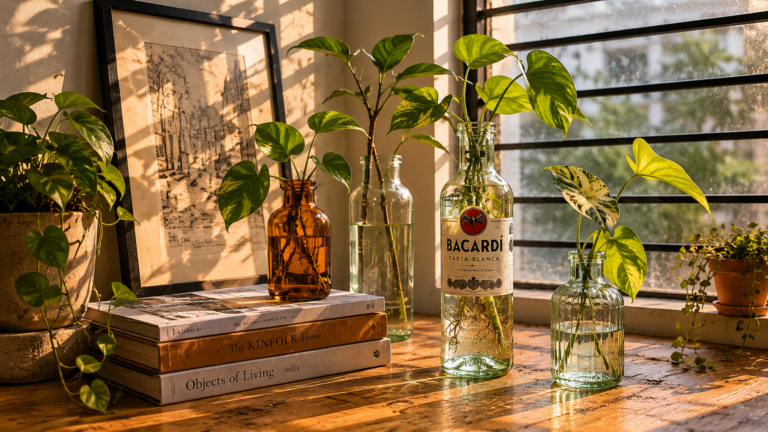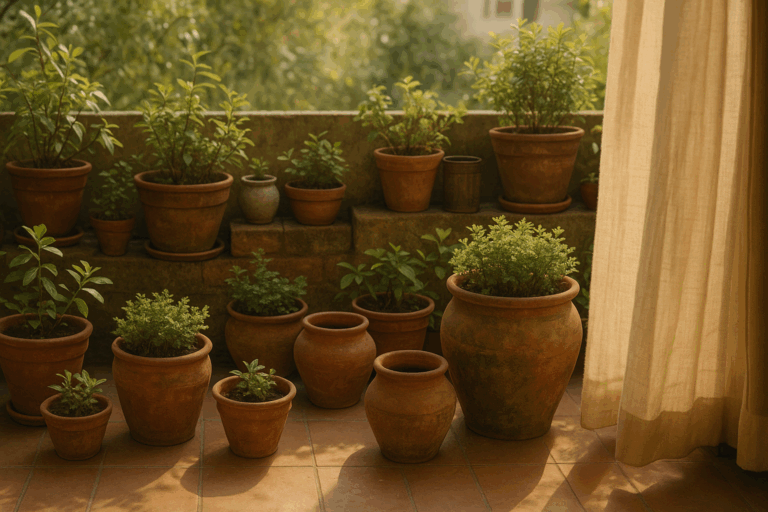
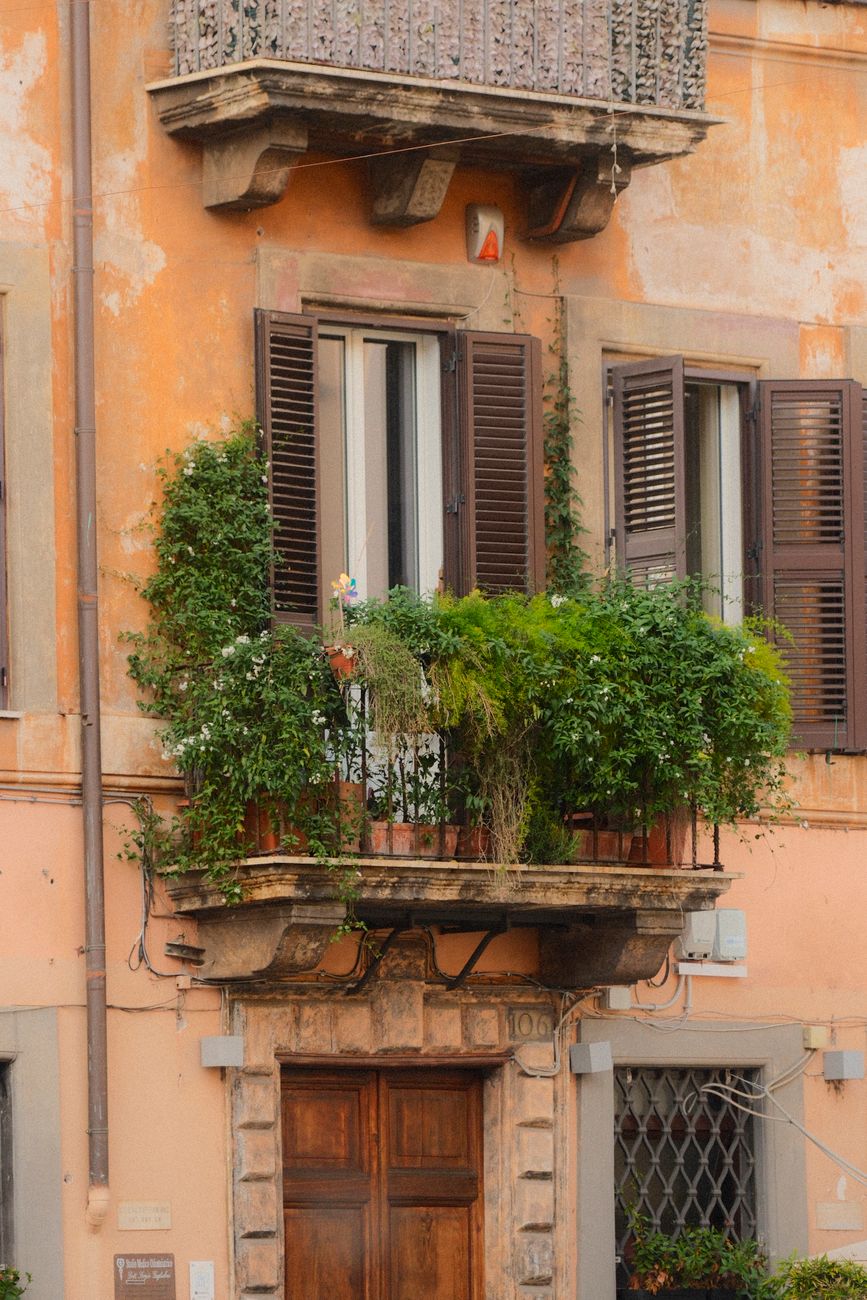

Whenever I tell people that gardening is one of my favorite hobbies, they immediately make one assumption.
“You must have a really nice balcony.”
I don’t.
In fact, I don’t even have a balcony.
I live in a ground-floor apartment.
My gardening space is actually the area along the outer wall at the front of my apartment, right next to the parking area.
And honestly, I think that’s exactly why I wanted to write this.
Because I keep seeing people postpone gardening for the same reason.
“I don’t have enough space.”
“My balcony is too small.”
“I’ll start after I move into a bigger house.”
“I don’t have a garden.”
I understand that thinking because I used to think the same way.
But somewhere along the way, I realized something.
Gardening isn’t about balconies.
It’s about using whatever space you already have.
A balcony.
A windowsill.
A rooftop.
An outer wall.
A small courtyard.
Even a few pots beside a parking space.
The location doesn’t matter nearly as much as people think.
And that’s why I believe gardening is one of the best hobbies you can start.
Not because it’s trendy.
Not because social media suddenly decided that every home should look like a tropical resort.
And definitely not because you need dozens of expensive plants arranged perfectly for Instagram.
I think it’s one of the best hobbies because it changes your relationship with your home.
And that change happens much faster than most people expect.
You Stop Seeing Empty Space and Start Seeing Possibilities
I still remember looking at that empty area outside my apartment.
There wasn’t anything wrong with it.
But there wasn’t anything interesting about it either.
It was just…space.
A plain wall.
A few unused corners.
A parking area that served its purpose and nothing more.
Then I brought home a plant.
Then another.
Then a few more.
And slowly, that forgotten space started changing.
The strange thing about gardening is that it changes the way you see space.
You stop asking, “What can I store here?”
You start asking, “What can I grow here?”
That’s a completely different mindset.
And it doesn’t happen only with gardening.
It spills over into other parts of your home.
You begin noticing corners you’ve ignored for years.
You start rearranging things.
You experiment with lighting.
You move furniture around.
You add shelves.
You build plant stands.
You become more involved in your environment.
I think that’s one of the reasons so many people become interested in home improvement after they start gardening.
The two hobbies naturally complement each other.
Plants Make a Home Feel Alive
A home without plants can still be beautiful.
But there’s something special about living things sharing your space.
Plants change every single day.
A new leaf appears.
A flower blooms.
A stem gets longer.
A cutting develops roots.
The environment around you becomes dynamic.
And that’s difficult to replicate with furniture or decorative objects.
I’ve bought home decor items that looked fantastic on the day I brought them home.
Six months later?
They looked exactly the same.
Plants don’t.
They’re constantly evolving.
I think that’s why I spend more time in my gardening area than I ever expected.
I go outside to water one plant.
Then I notice another one needs attention.
Then I see new growth.
Then I start checking all the pots.
Ten minutes suddenly becomes forty-five.
Research seems to support what many gardeners already know.
Organizations such as the World Health Organization have repeatedly highlighted the connection between access to green spaces and better physical and mental well-being.
Researchers have been studying this for decades.
And while most studies focus on parks, urban green spaces, and public environments, I think many home gardeners have experienced something similar on a much smaller scale.
Sometimes, a few square feet of greenery can completely change the atmosphere of a home.
Gardening Teaches You Patience Whether You Want to Learn It or Not
I’m not a naturally patient person.
I like seeing results.
If I’m working on a DIY project, I want to finish it.
If I’m painting something, I want to see the final result.
If I’m reorganizing my home, I want everything completed immediately.
Plants don’t care.
They operate on their own schedule.
And they’ll happily ignore yours.
I learned this lesson the hard way.
Like many beginners, I thought more attention automatically meant better care.
More water.
More fertilizer.
More checking.
More moving plants around.
I was convinced I was helping.
I wasn’t.
I was interfering.
Overwatering remains one of the most common reasons beginners lose their plants, according to many horticulture experts and university extension programs.
I laughed when I first discovered that.
Because it described me perfectly.
I wasn’t neglecting my plants.
I was suffocating them with affection.
Gardening forces you to slow down.
You water.
You wait.
You observe.
You adjust.
And eventually, you learn that growth isn’t something you can rush.
Honestly, I think that’s one of the biggest lessons gardening teaches.
And that lesson extends far beyond plants.
The Mental Health Benefits Aren’t Just Another Internet Trend
I know.
Everything seems to be marketed as therapy these days.
Walking is therapy.
Cooking is therapy.
Painting is therapy.
Journaling is therapy.
At some point, those claims start losing their meaning.
But gardening feels different to me.
Because it shifts your attention away from yourself.
You’re not sitting alone, analyzing every thought in your head.
You’re focused on something external.
You’re checking soil moisture.
You’re pruning leaves.
You’re repotting a plant.
You’re cleaning a planter.
And for a little while, your brain finally gets a break.
A study published in Frontiers in Psychology found that gardening activities were associated with lower stress levels and improved mood.
Researchers from the University of Exeter have also published studies linking exposure to green environments with better psychological health.
But honestly?
I don’t need scientific papers to convince me.
I’ve experienced it.
There have been days when I’ve gone outside feeling irritated, stressed, or mentally exhausted.
Then I start working with my plants.
Thirty minutes later, I feel different.
Not because I’ve solved all my problems.
I haven’t.
But my mind feels quieter.
And sometimes, that’s enough.
You Learn to Pay Attention Again
This might sound strange, but gardening made me more aware of seasons.
Before I started gardening, summer was just hot weather.
Winter was just cold weather.
Rain was either convenient or inconvenient.
That was it.
Now?
I pay attention.
I notice temperature changes.
I notice humidity.
I notice how sunlight shifts throughout the year.
I notice how different plants respond to changing conditions.
According to reports from the National Aeronautics and Space Administration (NASA), seasonal patterns and changing climate conditions continue to influence plant growth worldwide, which has become an increasingly important topic for both professional agriculture and home gardeners.
And while I’m obviously not running a farm beside my apartment parking area, those seasonal changes suddenly became much more meaningful.
Nature stopped being background scenery.
It became part of my daily routine.
You Don’t Need a Big Budget
Social media has created some unrealistic expectations.
Sometimes it feels like every gardening video features expensive ceramic planters, imported plants, professional landscaping, decorative lighting, and perfectly designed spaces.
Real life doesn’t work that way.
At least mine doesn’t.
Some of my favorite gardening projects have cost almost nothing.
I’ve reused containers.
I’ve repurposed old items.
I’ve built simple DIY solutions instead of buying expensive accessories.
And that’s another reason I love gardening.
It overlaps beautifully with other interests.
DIY.
Home improvement.
Thrift shopping.
Decor.
Everything connects.
If you’re starting from scratch, I wouldn’t recommend buying twenty plants.
I wouldn’t recommend buying ten different fertilizers.
And I definitely wouldn’t recommend trying to copy somebody else’s setup.
I’d start small.
Really small.
Here’s the approach I’d suggest.
- Buy two or three beginner-friendly plants.
- Spend a week observing sunlight in your space.
- Invest in good potting soil.
- Learn the watering requirements of each plant.
- Expand slowly.
That’s it.
You don’t need to build your dream garden in a weekend.
Start With Plants That Actually Want to Survive
This is probably my most controversial gardening opinion.
I think beginners often fail because experienced gardeners recommend the wrong plants.
Some plants are beautiful.
Some plants are beginner-friendly.
Those two categories don’t always overlap.
Here’s a simple guide.
| Plant | Difficulty | Best For |
|---|---|---|
| Snake plant | Easy | Low-maintenance beginners |
| Pothos | Easy | Indirect light |
| Aloe vera | Easy | Sunny locations |
| Mint | Easy | Small spaces |
| Marigold | Moderate | Flower lovers |
Your first goal shouldn’t be creating a collection.
Your first goal should be keeping a few plants alive.
Confidence comes later.
Gardening Creates Small Rituals That Slowly Change Your Life
This is my favorite part.
Not the flowers.
Not the leaves.
Not even the gardening itself.
The routines.
I never expected that.
But now, I find myself stepping outside in the morning to check on my plants.
I spend a few minutes watering them.
I sit for a while.
Sometimes I have tea.
Sometimes I don’t.
Sometimes I plan a DIY project.
Sometimes I simply sit there and do nothing.
And I think that’s becoming increasingly rare.
According to research covered by publications such as The New York Times, interest in gardening exploded during the pandemic and remained surprisingly resilient afterward.
I understand why.
People weren’t just buying plants.
They were searching for connection.
Connection with nature.
Connection with their homes.
Connection with a slower pace of life.
And honestly, I don’t think that desire is disappearing anytime soon.
The Best Part Has Nothing to Do With Gardening
If you’ve read this far, you’ve probably realized something.
This article isn’t really about balconies.
And it’s not entirely about plants either.
It’s about creating a space that belongs to you.
A space that pulls you away from screens.
A space that encourages you to slow down.
A space that changes and grows alongside you.
I don’t have a balcony.
I garden beside the outer wall of my ground-floor apartment, next to the parking area.
And that’s exactly why I believe anybody can do this.
Stop waiting for the perfect house.
Stop waiting for a bigger balcony.
Stop waiting until you have more money or more free time.
Look around.
What’s available right now?
A corner?
A wall?
A window?
A few empty feet beside your front door?
Start there.
Buy one plant.
See what happens.
You might discover that the smallest space around your home eventually becomes your favorite place to spend time.
Discover more from Deepak Offline
Subscribe to get the latest posts sent to your email.